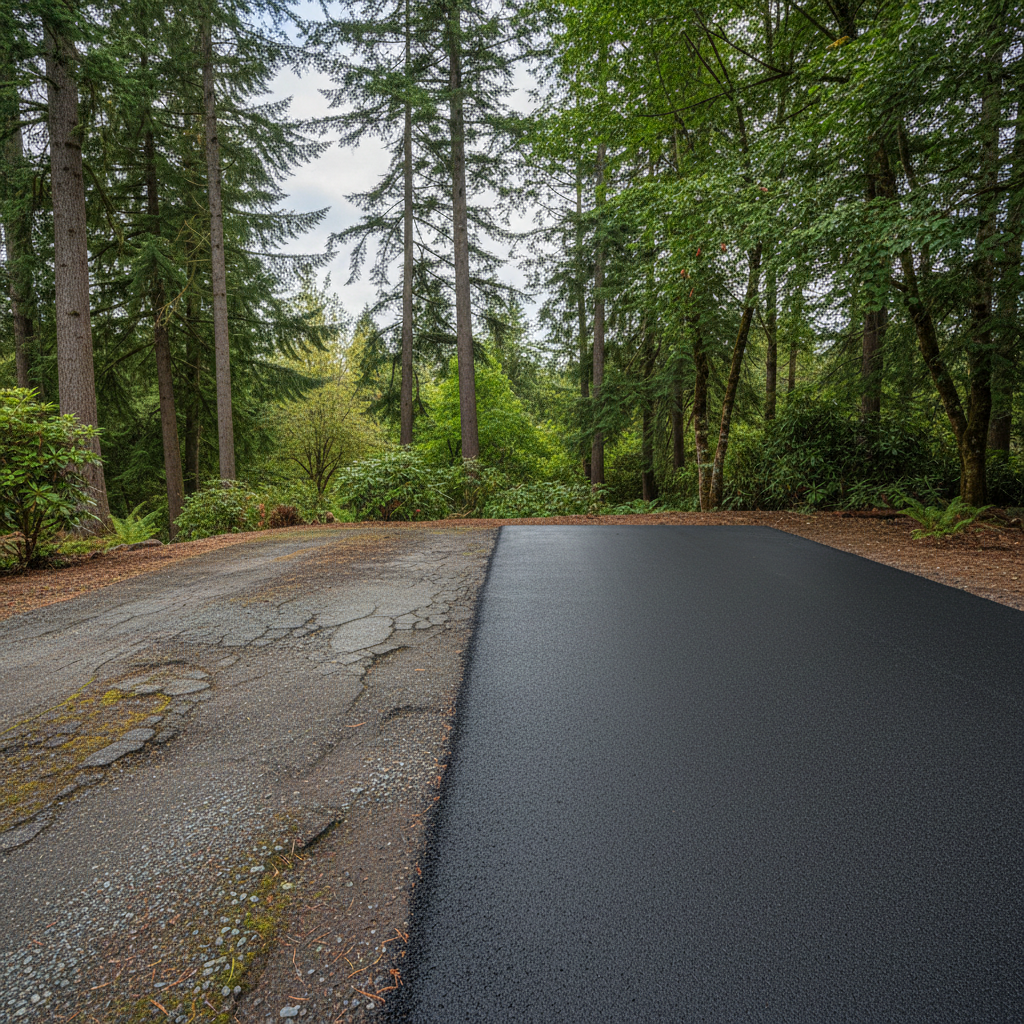
Your commercial property's asphalt isn't just about looks; it's about safety, curb appeal, and protecting your investment. When that asphalt starts showing its age, you've got a decision to make. Do you go for a quick fix with an overlay, or do you bite the bullet and get a full replacement? I've seen both done all over Kent, from the older industrial parks near the Green River to the newer retail spots up on the East Hill. Here's what I tell folks when they're trying to figure it out.
Asphalt Overlay: The Resurface Option
An asphalt overlay, or resurfacing, is basically putting a new layer of asphalt right on top of your existing one. Think of it like a fresh coat of paint, but for your pavement. It's usually a 1.5 to 2-inch layer of new hot mix asphalt.
When an Overlay Works Best:
- Your existing asphalt has minor cracking, fading, or surface wear. We're talking hairline cracks, not alligator cracking that looks like a dried-up riverbed.
- The base underneath your current asphalt is still solid. This is crucial. If the foundation is failing, an overlay is just putting a band-aid on a broken leg.
- You're looking for a more budget-friendly option with a quicker turnaround. Less excavation means less time and less cost.
Pros of an Overlay:
- Cost: Significantly cheaper than a full replacement, usually 40-60% less.
- Speed: We can get in and out faster, minimizing disruption to your business or tenants.
- Appearance: Gives you that brand-new, smooth black look instantly.
- Durability (short-term): It'll protect the underlying pavement from further weather damage for a good while.
Cons of an Overlay:
- Limited Lifespan: You're typically looking at 8-15 years, depending on traffic and maintenance. It's not as long-lasting as a full replacement.
- Doesn't Fix Structural Issues: If your base is weak or you've got significant drainage problems, an overlay won't solve those. The cracks will eventually reflect through the new layer.
- Height Changes: Adding a new layer raises the pavement height. This can be an issue around drains, curbs, or building entrances, and might require some adjustments.
Full-Depth Asphalt Replacement: The Complete Overhaul
This is exactly what it sounds like. We tear out all the old asphalt, sometimes even some of the sub-base if it's compromised, and then rebuild from the ground up. We're talking new aggregate base layers, and then 3-6 inches of fresh asphalt.
When Full Replacement is Necessary:
- You've got extensive alligator cracking, potholes, or large areas of crumbling asphalt.
- There are significant drainage issues causing standing water or widespread base failure.
- The pavement has settled unevenly, creating dips and humps. This often points to a problem with the subgrade, which is common in areas of Kent with softer, clay-heavy soils.
- You need the longest-lasting solution possible for high-traffic areas.
Pros of a Full Replacement:
- Durability & Lifespan: This is the big one. A properly installed full replacement can last 20-30 years or more with good maintenance.
- Addresses Root Problems: We can fix drainage, stabilize the sub-base, and ensure a solid foundation.
- Superior Strength: Built to handle heavy traffic and harsh weather conditions for decades.
- Appearance: Not just new on top, but structurally sound throughout.
Cons of a Full Replacement:
- Cost: It's a significant investment, often double or more than an overlay.
- Time & Disruption: It takes longer to excavate, prepare the base, and lay multiple layers of asphalt. This means more downtime for your business.
- More Involved Process: More equipment, more labor, and more materials.
So, Which One Should You Choose?
Honestly, it boils down to the condition of your existing pavement and your budget. If you've got relatively minor surface issues and a good, solid base, an overlay is a fantastic, cost-effective way to refresh your property's look and extend its life for another decade. It's a smart choice for many businesses looking for a good return on investment without breaking the bank.
However, if your parking lot looks like a patchwork quilt of repairs, has deep potholes, or you can feel the car bouncing over uneven sections, you're likely past the point where an overlay will do much good. You'll be throwing money away on a temporary fix. In those cases, a full replacement, while a bigger upfront cost, is the only real solution that will last. It saves you from having to deal with constant repairs and gives you peace of mind for decades.
The best way to know for sure? Get us out there. At Valley Paving Co, we'll give you an honest assessment. We'll look at the cracking, test the base, and talk through your budget and long-term goals. We're not here to upsell you on something you don't need; we're here to make sure you get the right solution for your commercial property here in Kent.