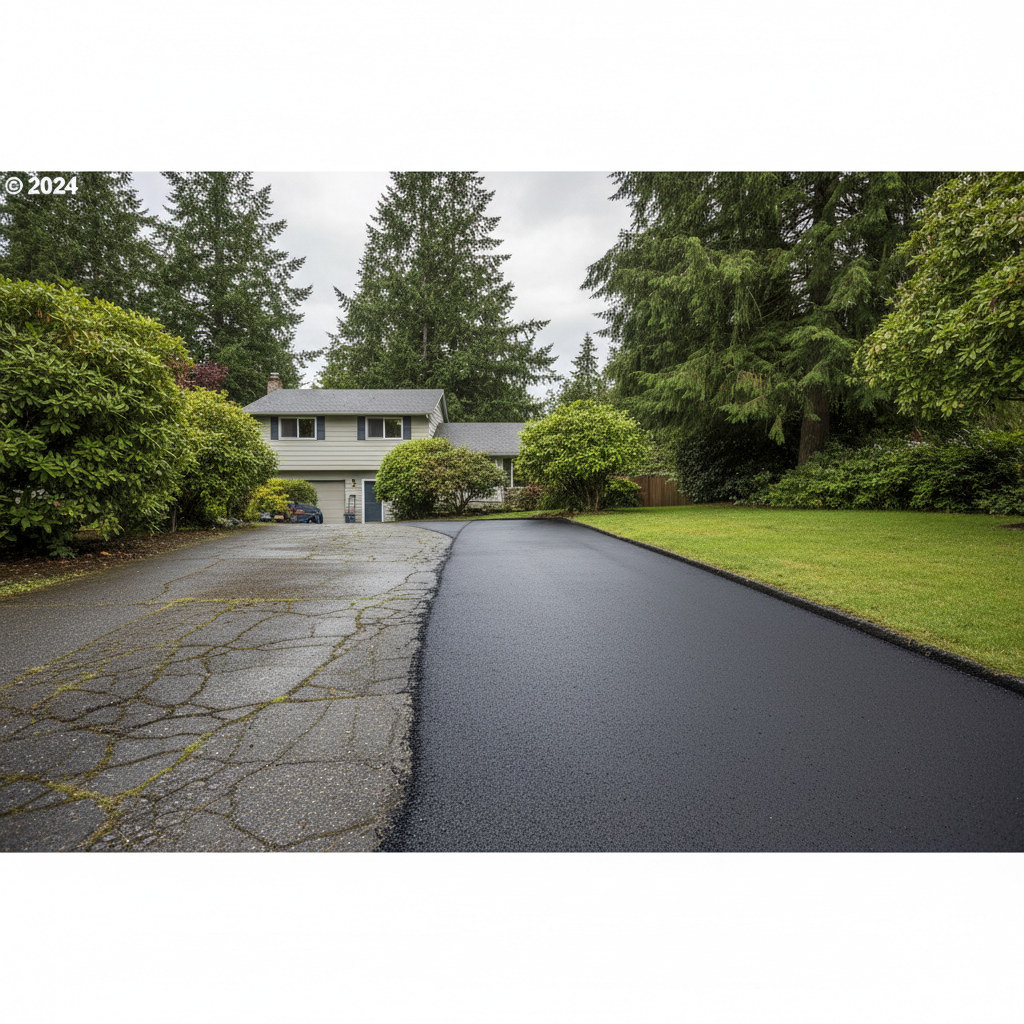
So, you're thinking about a new driveway. Maybe yours is cracked up, or you're building new and need to decide. It usually comes down to two main players: asphalt or concrete. Both have their pros and cons, especially here in Kent, and what's right for your neighbor might not be right for you. Let's talk about what I see on the job every day.
Cost: Upfront vs. Long-Term
Let's get straight to it: money. Generally, asphalt is cheaper to install upfront. You're looking at a lower cost per square foot for the material and the labor to put it down. That's a big draw for a lot of folks. Concrete, on the other hand, is usually more expensive to install initially. Sometimes significantly more.
But don't just stop there. You've got to think long-term. While concrete costs more to put in, its lifespan can be much longer if it's installed right and maintained. We're talking 30+ years, easily. Asphalt might give you 15-20 years, maybe 25 if you're really on top of maintenance. So, that initial saving on asphalt can sometimes get eaten up by needing to replace it sooner.
Durability & Our Kent Weather
This is where our local conditions really come into play. Kent sees its fair share of rain, and we get those freeze-thaw cycles in the winter. That's tough on any surface.
- Asphalt: It's flexible. That's its superpower. When the ground shifts a little, or we get those temperature swings, asphalt can expand and contract without cracking as easily as concrete. It handles de-icing salts pretty well too, which is good if you're trying to keep things clear in a cold snap. The downside is that it's softer. Heavy vehicles, like an RV or a delivery truck that sits for a while, can leave impressions. And oil or gas spills? They'll eat right through it if not cleaned up fast.
- Concrete: This stuff is hard. Really hard. It stands up to heavy loads much better than asphalt. If you've got a big truck or a lot of heavy traffic, concrete might be the way to go. The problem with concrete and our weather is its rigidity. Those freeze-thaw cycles can cause it to crack if water gets into small fissures and freezes. You'll also see it spall (flake off) if you use too much de-icing salt, especially in the first year after it's poured. I've seen plenty of concrete driveways in places like the East Hill area, where drainage can be an issue, develop cracks over time if they weren't installed with proper sub-base and expansion joints.
Maintenance: Keeping It Looking Good
Nobody wants a driveway that looks like a patchwork quilt. Maintenance is key for both, but they require different things.
- Asphalt: This is a higher maintenance option. You'll need to sealcoat it every 2-5 years. This isn't just for looks; it protects the asphalt from UV rays, water, and oil. It keeps it flexible and extends its life. Cracks need to be filled promptly to prevent water from getting underneath and damaging the sub-base. It's an ongoing commitment, but it's not usually a huge, expensive job each time.
- Concrete: It's lower maintenance, generally. You don't need to sealcoat it every few years like asphalt. A good quality sealer applied every 3-5 years can help protect it from stains and moisture, but it's not as critical for structural integrity as it is with asphalt. The main thing with concrete is dealing with cracks if they appear. They're harder to repair seamlessly, and sometimes you're looking at cutting out sections and repouring. Stains can also be more stubborn to remove from concrete's porous surface.
Appearance & Customization
- Asphalt: It's black. That's pretty much it. It gives a clean, uniform look, especially when it's freshly sealcoated. It can look really sharp against a green lawn or a light-colored house.
- Concrete: This is where concrete really shines for customization. You can get it in various colors, stamped with patterns to mimic stone or brick, or even exposed aggregate finishes. If you're going for a specific aesthetic for your home, concrete offers a lot more design flexibility.
My Recommendation for Kent Homeowners
Look, I've laid a lot of both over the years with Valley Paving Co. For most homeowners in Kent, especially considering our climate and the typical residential use, I usually lean towards asphalt for its cost-effectiveness and flexibility.
It's cheaper upfront, which is a big deal for many budgets. Its flexibility handles our ground movement and freeze-thaw cycles better, which means fewer major cracks if it's maintained. Yes, you have to sealcoat it, but that's a relatively easy and affordable maintenance task that keeps it looking good and performing well. If you're willing to do that regular maintenance, asphalt will serve you well for a long time.
Now, if you've got a specific design vision, or you're parking heavy equipment regularly, or you just absolutely hate the idea of sealcoating, then concrete is a solid choice. Just make sure it's installed by someone who knows what they're doing, with a proper sub-base and drainage, to minimize those cracking risks we talked about.
Ultimately, it comes down to your budget, your aesthetic preference, and how much ongoing maintenance you're comfortable with. Both can be great options when installed correctly.