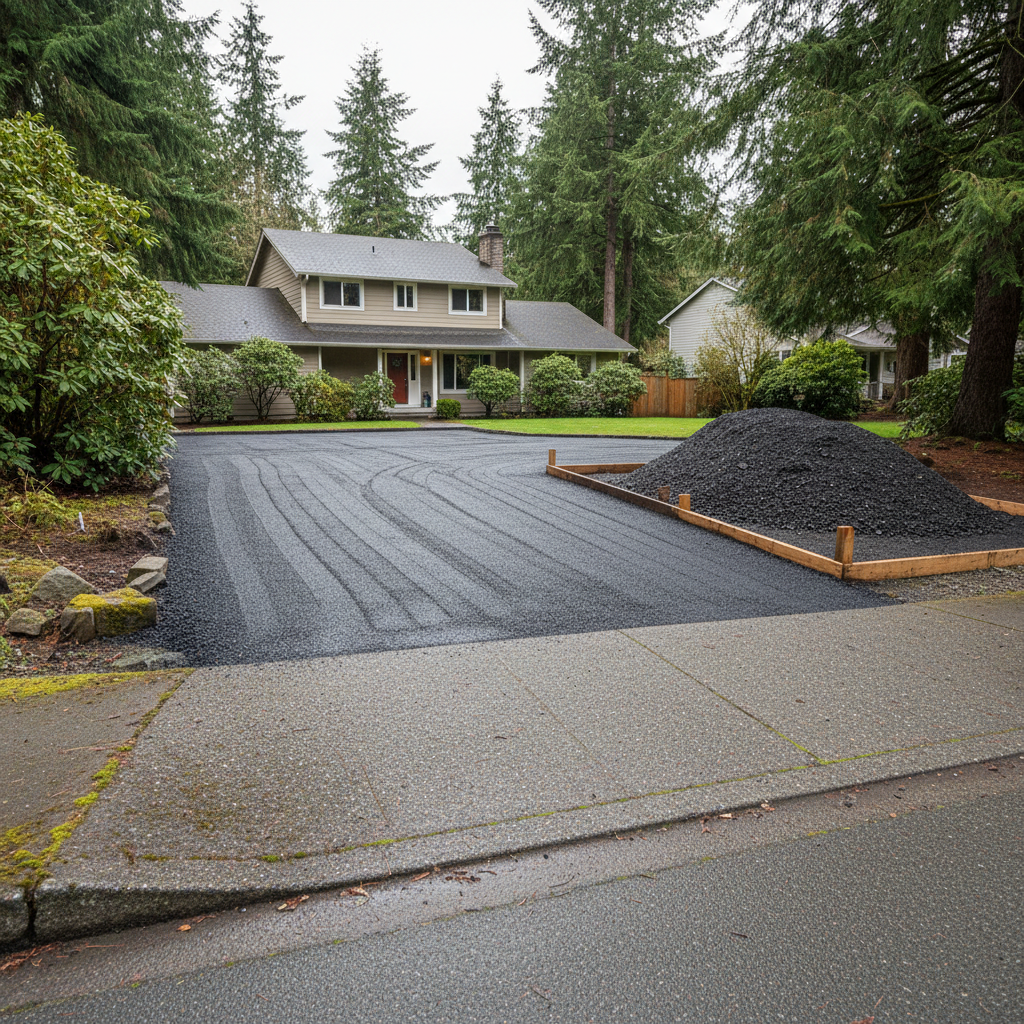
Alright, let's talk about asphalt milling. If you've got an older driveway or a section of pavement that's seen better days, but a full tear-out and replacement feels like overkill, milling might be exactly what you need. It's basically like giving your asphalt a fresh shave, removing the top layer of damaged material so we can put down new asphalt without changing the overall grade too much. It's a smart way to fix things up, but here in Kent, our weather has a lot to say about when we can do it right.
Why Kent's Weather Matters for Milling
You know how it is around here. One day it's sunny, the next it's a downpour. That's just life in the Puget Sound, and it's something we always factor into our work at Valley Paving Co. When it comes to milling, moisture is the big enemy. We're talking about removing a layer of asphalt, which creates a fresh, porous surface. If that surface gets soaked before we can put down the new layer, you're asking for trouble, plain and simple.
Rain can cause a few problems. First, it can soften the sub-base beneath the milled surface, compromising its stability. Second, water can get trapped between the old and new layers, leading to adhesion issues down the road. You want a strong, lasting bond, and water just gets in the way of that. Plus, milling equipment doesn't work as efficiently or safely on slick, wet surfaces. It's not just about getting the job done; it's about getting it done right and safely.
When's the Best Time to Schedule Asphalt Milling?
Given our climate, you've probably guessed it: dry weather is king. That means late spring, summer, and early fall are generally your best bets. Think June through September, maybe even into early October if we get a nice dry spell. These are the months when we have the longest stretches of dry days, allowing us to mill, clean, and then pave without worrying about an unexpected shower ruining the whole operation.
Now, I'm not saying it's impossible to mill outside these months. We've certainly done work in April or late October. But it requires a much closer eye on the forecast, and sometimes, you just have to reschedule if the weather turns. It's always better to wait for optimal conditions than to rush a job that won't last. We're not in a desert, so planning is key.
What Weather Conditions Affect the Work?
Beyond just rain, other factors come into play. Temperature, for instance. While milling itself isn't as sensitive to cold as laying new asphalt, extremely low temperatures can make the existing asphalt more brittle, which affects the milling process. We prefer temperatures above 45-50 degrees Fahrenheit for milling, and definitely higher for laying the new asphalt layer.
Humidity isn't usually a major concern for milling directly, but it ties into the overall drying time. If it's warm and dry, things dry out fast. If it's cool and damp, even without direct rain, moisture can linger. Wind can actually be a good thing sometimes, helping to dry out a surface quickly after a light drizzle, but we're still talking about needing a solid window of dry weather for the actual work.
One thing I've seen in some of the older Kent neighborhoods, especially those with lots of mature trees like around Lake Meridian, is how shade can keep moisture on the pavement longer. If your driveway is heavily shaded, that's another factor we'll consider when scheduling. It just means we need an even longer dry window to ensure everything is ready.
Protecting Your Investment Year-Round
So, you've had your asphalt milled and a new layer put down. Great! Now, how do you keep it looking good and lasting long, especially with our Kent weather?
- Good Drainage is Crucial: This is probably the most important thing. Make sure water isn't pooling on your driveway. If you've got low spots, they'll collect water, and that's where you'll see accelerated wear, cracking, and potholes. Proper grading and drainage are built into our work, but keep an eye out for any changes.
- Keep it Clean: Leaves, dirt, and debris can trap moisture against the asphalt, leading to degradation. Give your driveway a good sweep or blow-off regularly, especially in the fall.
- Address Cracks Promptly: Even small cracks can let water seep into the sub-base, especially during our long, wet winters. Get them sealed as soon as you notice them. This is a relatively inexpensive fix that saves you a lot of money down the line.
- Sealcoating (Eventually): After your new asphalt has had about 6-12 months to cure, consider sealcoating. This provides a protective barrier against water, UV rays, and oil spills. It's like sunscreen for your driveway, and it's a critical part of long-term maintenance here in the Pacific Northwest.
- Avoid Heavy Loads: Try not to park heavy RVs or construction equipment on your residential driveway for extended periods. Concentrated weight can cause depressions and cracks, especially if the sub-base isn't designed for it.
Milling is a fantastic solution for rejuvenating your asphalt without the full cost and disruption of a complete removal. Just remember that here in Kent, patience and timing with our weather are key to a successful, long-lasting project. If you're thinking about milling for your property, give us a call at Valley Paving Co. We're happy to come out, take a look, and give you an honest assessment of what's best for your asphalt and when we can get it done right.