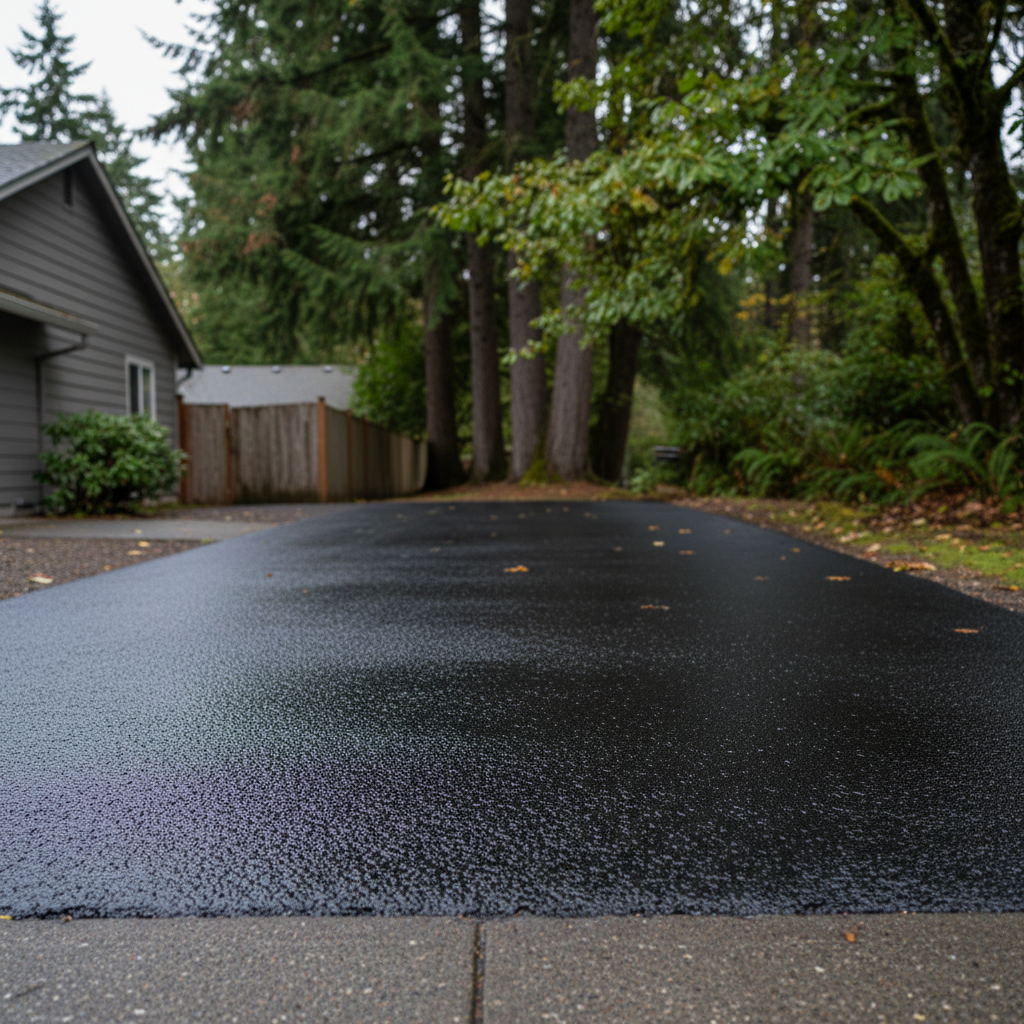
Alright, let's talk sealcoating. I get a lot of questions about this service, and frankly, there's a lot of bad info out there. As a local guy who's been doing this for years, I've seen what works and what doesn't, especially with our Kent weather. So, I'm cutting through the noise and giving you straight answers to the questions I hear most often from homeowners.
What exactly is sealcoating, and why do I even need it?
Look, sealcoating is basically like sunscreen and a protective shield for your asphalt. It's a liquid asphalt emulsion that we apply to your paved surface. When it dries, it forms a protective layer over your existing asphalt. Why do you need it? Simple. Your asphalt driveway is constantly getting hammered by the sun's UV rays, rain, oil spills, and general wear and tear. UV rays dry out the asphalt, making it brittle and prone to cracking. Water seeps into those cracks, freezes, expands, and then you've got potholes. Oil and gas spills dissolve the asphalt binder. Sealcoating slows all that down. It replenishes the oils, fills minor surface voids, and creates a barrier against the elements. It's preventative maintenance, plain and simple, and it'll save you a lot of money on repairs down the road.
How often should I sealcoat my driveway?
This is probably the most common question I get. Generally, for a residential driveway, you're looking at every 2 to 3 years. That's a good rule of thumb. Now, there are factors that can push that timeline a bit. If your driveway gets a lot of direct sunlight all day, or if you've got heavy traffic on it (maybe you're running a home business with deliveries), you might lean closer to every two years. If it's mostly shaded and you're just driving a couple of cars on it, you might stretch it to three. Don't fall for the guys who say you need it every year; that's just overkill and a waste of your money. And don't wait until your driveway is completely gray and falling apart either, because then sealcoat isn't enough.
What's the best time of year to get sealcoating done in Kent?
Here in Kent, timing is everything because of our rain. You need a good stretch of dry, warm weather for the sealcoat to cure properly. That means late spring, summer, and early fall are your best bets. We're looking for temperatures consistently above 50°F (and ideally 60°F or higher) during the day and no rain in the forecast for at least 24-48 hours after application. Trying to do it when it's too cold or too wet is just asking for trouble – it won't adhere right, and you'll end up with a mess or a job that doesn't last. We generally start booking sealcoating jobs around May and go through September or early October, depending on the weather.
Can I just DIY sealcoating? What's the difference between professional and store-bought products?
You can absolutely buy sealcoat at a big box store and try to do it yourself. But here's the honest truth: it's not the same. The stuff you buy off the shelf is usually a much thinner, less durable product. It's often diluted and won't give you the same level of protection or longevity as the commercial-grade sealants we use. Plus, applying it evenly, getting good coverage, and prepping the surface correctly takes skill and the right equipment. You need to clean the surface thoroughly, fill cracks, and then apply it consistently. I've seen plenty of DIY jobs that end up streaky, uneven, or peeling within a year. You're paying for quality materials, proper surface preparation, and experienced application when you hire a company like Valley Paving Co. It's an investment that lasts longer and looks better.
How long do I need to stay off my driveway after sealcoating?
Patience is key here. After we apply the sealcoat, you'll need to keep all vehicles off it for at least 24-48 hours. The longer, the better, honestly. If you can push it to 72 hours, that's ideal, especially if it's a bit cooler or humid. Walking on it is usually fine after a few hours, but don't let pets with sharp claws or kids with bikes on it too soon. Driving on it before it's fully cured can leave tire marks, scuffs, and even pull up the fresh sealcoat. We'll always give you specific instructions based on the weather conditions on the day of your service.
What kind of prep work do I need to do before you arrive?
Not much, but what you do helps us a lot. First, make sure your driveway is clear of anything that shouldn't be there – cars, trash cans, toys, planters, anything like that. If you've got weeds or grass growing in cracks, pull them out. We'll do a final sweep and blow off any loose debris, but a clear driveway makes our job quicker and ensures a better finish. If you've got any major oil stains, try to clean them up as best you can with a degreaser. We'll address any remaining stains during our prep, but the cleaner you get it, the better the sealcoat will adhere.
Will sealcoating fix existing cracks or potholes?
No, not really. This is a common misconception. Sealcoating is a surface treatment. It's designed to protect your asphalt and extend its life, but it's not a repair solution for significant damage. It can fill tiny hairline cracks and minor surface imperfections, sure. But if you've got cracks wider than a quarter-inch, or any actual potholes, those need to be repaired before we apply sealcoat. We'll usually recommend and quote for crack filling and pothole repair as part of the overall job. Putting sealcoat over big cracks is like putting a band-aid on a broken bone – it won't fix the underlying problem, and those cracks will just reappear through the sealcoat.